
North American Mustang
Fighter · North American Aviation · United States
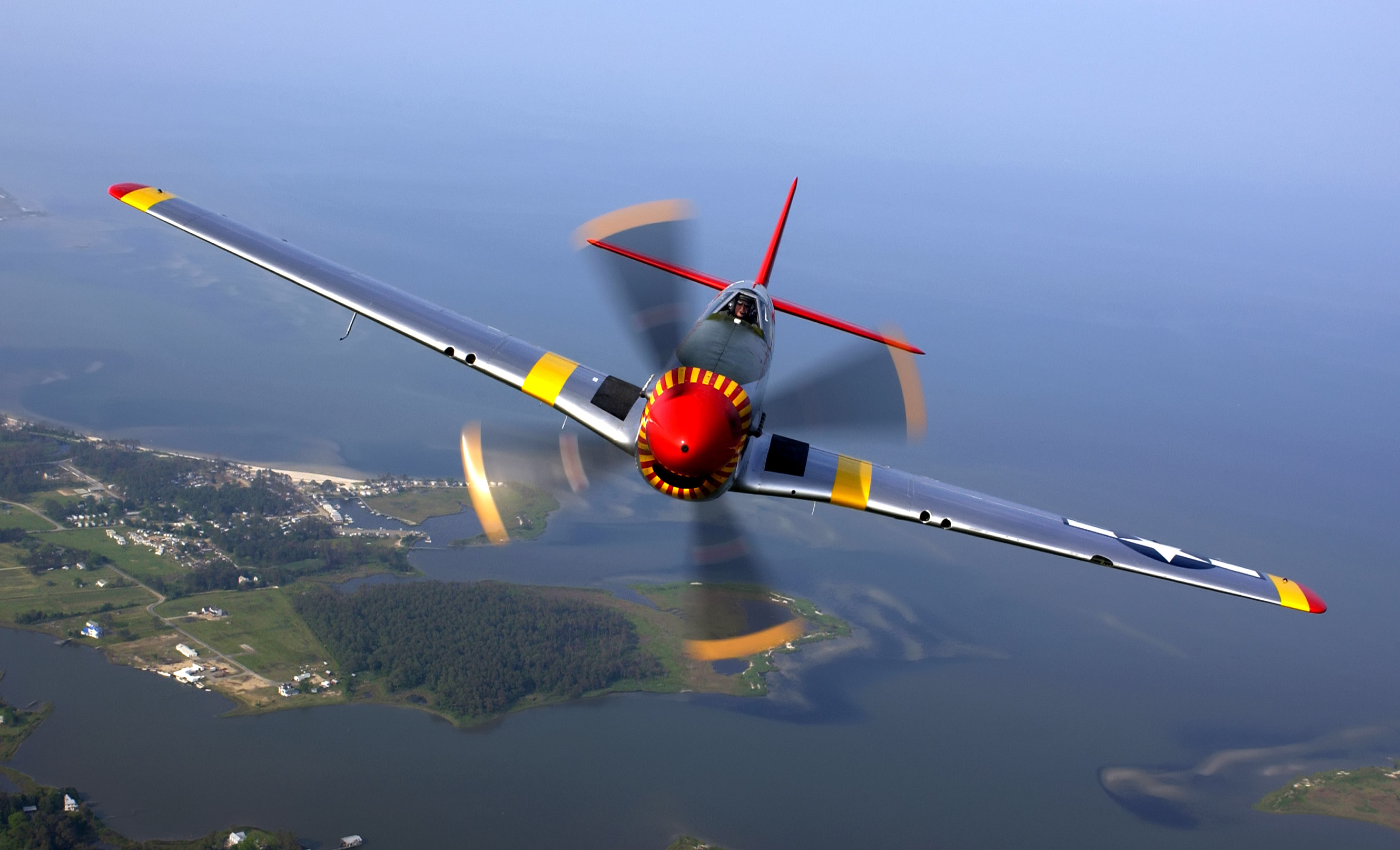
ⓘ licence & credit
U.S. Air Force photo by Tech. Sgt. Ben Bloker / Public domain, via Wikimedia Commons — https://commons.wikimedia.org/wiki/File:P-51_Mustang_edit1.jpg| Typical crew | 1 |
|---|---|
| Engines | 1 × Allison or Rolls-Royce/Packard Merlin |
| First flight | 1940 |
| Number built | 15,486 |
Photographs
ⓘ licence & credit
USAAF / Public domain, via Wikimedia Commons — https://commons.wikimedia.org/wiki/File:352_FG_Frantic.jpegView source & full licence →ⓘ licence & credit
James G Robinson. / Public domain, via Wikimedia Commons — https://commons.wikimedia.org/wiki/File:339th_Fighter_Group_-_Pilots_2.jpgView source & full licence →ⓘ licence & credit
United States Air Force / Public domain, via Wikimedia Commons — https://commons.wikimedia.org/wiki/File:31fg-sansevero-italy.jpgView source & full licence →ⓘ licence & credit
United States Air Force / Public domain, via Wikimedia Commons — https://commons.wikimedia.org/wiki/File:21st_Fighter_Group_P-51s_at_Iwo_Jima_2_-_1945.pngView source & full licence →ⓘ licence & credit
United States Air Force / Public domain, via Wikimedia Commons — https://commons.wikimedia.org/wiki/File:21st_Fighter_Group_P-51s_at_Iwo_Jima_-_1945.pngView source & full licence →ⓘ licence & credit
United States Air Force / Public domain, via Wikimedia Commons — https://commons.wikimedia.org/wiki/File:190th_Fighter_Squadron_F-51_Mustangs.jpgView source & full licence →ⓘ licence & credit
United States Air Force / Public domain, via Wikimedia Commons — https://commons.wikimedia.org/wiki/File:148th_Fighter_Squadron_F-51_Mustang_-_Spaatz_Field_Reading_Airport.jpgView source & full licence →ⓘ licence & credit
Unknown authorUnknown author or not provided / Public domain, via Wikimedia Commons — https://commons.wikimedia.org/wiki/File:%22Give_us_More_P-51%27s%22_-_NARA_-_514399.jpgView source & full licence →About
The North American Mustang is often called the finest fighter of the war, and the transformation that made it so was British. Designed in 1940 to a British purchasing requirement, the early Allison-engined Mustang reached the RAF in 1942 as a fast, long-ranging low-level reconnaissance and fighter-bomber aircraft — excellent down low, but lacking performance at altitude.
The breakthrough came when Rolls-Royce engineers at Hucknall fitted the Mustang with the Merlin engine. The combination of the Merlin’s high-altitude power with the Mustang’s clean airframe and large fuel capacity produced a fighter that could escort heavy bombers all the way to Berlin and back. American-built Packard Merlins powered the production P-51B and later marks; the RAF flew around 1,500 Merlin-Mustangs (as the Mustang III and IV) on daylight operations, while the type became the USAAF’s decisive long-range escort over Germany.
Sources: This page was compiled from publicly available historical sources, including North American P-51 Mustang — Wikipedia and P-51 Mustang's switch to the Merlin engine — Defense Media Network. The text is original and has been written from factual source material; no source text has been copied unless specifically quoted and attributed.
Engines
- Rolls-Royce Merlin — 60° liquid-cooled supercharged V12, 27 litres