
Westland Lysander
Reconnaissance · Westland Aircraft · United Kingdom
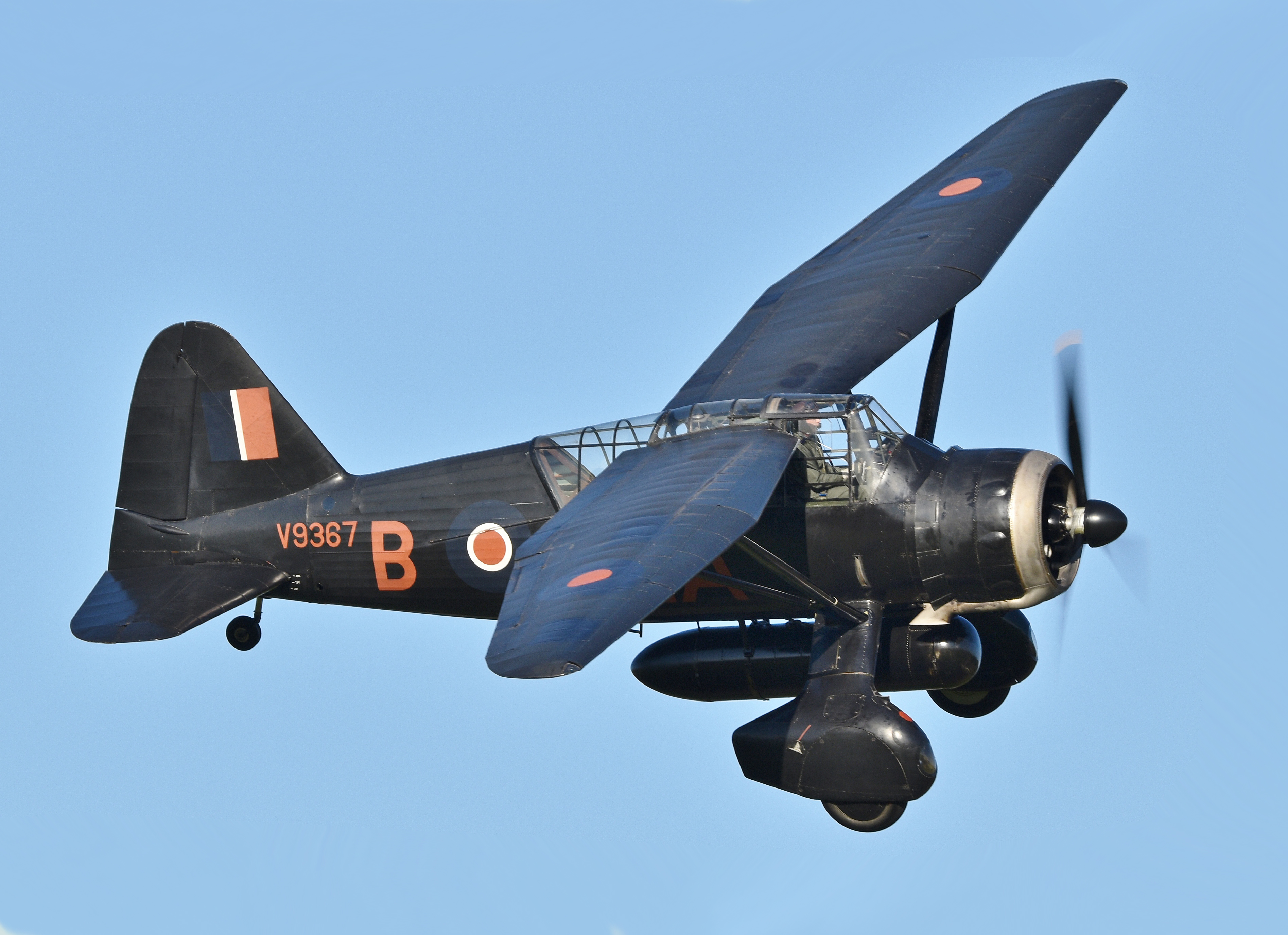
ⓘ licence & credit
Alan Wilson from Peterborough, Cambs, UK / CC BY-SA 2.0, via Wikimedia Commons — https://commons.wikimedia.org/wiki/File:Westland_Lysander_IIIa_%27V9367_MA-B%27_(G-AZWT)_(51554135693).jpg| Typical crew | 2 |
|---|---|
| Engines | 1 × Bristol Mercury or Perseus |
| First flight | 1936 |
| Number built | 1,786 |
Photographs
ⓘ licence & credit
San Diego Air & Space Museum Archives / Public domain, via Wikimedia Commons — https://commons.wikimedia.org/wiki/File:15_Westland_Lysander_I_(15216624663).jpgView source & full licence →About
The Westland Lysander was built for one job and remembered for another. Conceived as an army co-operation aircraft for liaison, artillery spotting and message-dropping, this high-winged two-seater had remarkable slow-flying qualities, with full-span slats and flaps giving it a very low stalling speed and the ability to land and take off from tiny improvised strips.
That short-field magic made it the ideal aircraft for the clandestine war. Flown by the special-duties squadrons — Nos. 138 and 161 Squadron — black-painted Lysanders slipped into occupied France on moonlit nights to land secret agents and ferry them home, touching down on fields marked only by a handful of torches. Modified to carry extra passengers and a long-range fuel tank, with a fixed ladder for quick exits, the Lysander landed and recovered well over a hundred Allied agents. It remains forever linked with the SOE and the Resistance.
Sources: This page was compiled from publicly available historical sources, including Westland Lysander — RAF Museum and Westland Lysander — Wikipedia. The text is original and has been written from factual source material; no source text has been copied unless specifically quoted and attributed.
Engines
- Bristol Mercury — 9-cylinder single-row air-cooled radial
- Bristol Perseus — 9-cylinder single-row air-cooled sleeve-valve radial