
Avro Anson
Trainer · Avro · United Kingdom
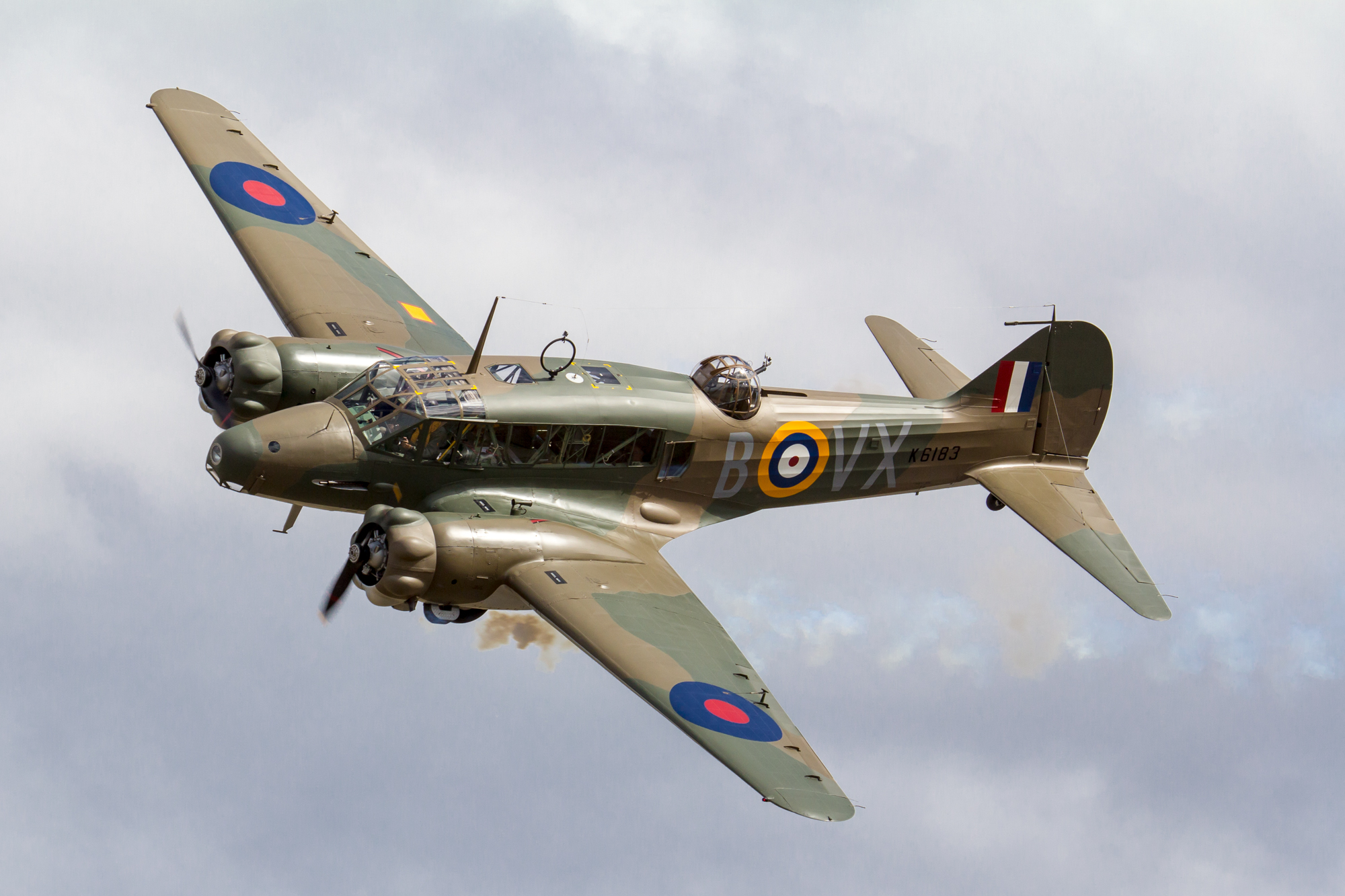
ⓘ licence & credit
Oren Rozen / CC BY-SA 3.0, via Wikimedia Commons — https://commons.wikimedia.org/wiki/File:CF15_Avro_Anson_ZK-RRA_040415_01.jpg| Typical crew | 4 |
|---|---|
| Engines | 2 × Armstrong Siddeley Cheetah |
| First flight | 1935 |
| Number built | 11,020 |
Photographs
ⓘ licence & credit
kenhodge13 / CC BY 2.0, via Wikimedia Commons — https://commons.wikimedia.org/wiki/File:Avro_Anson_Fuselage_on_Display_at_Coomalie_Airstrip_August_2010.jpgView source & full licence →ⓘ licence & credit
Public domain, via Wikimedia Commons — https://commons.wikimedia.org/wiki/File:Avro_Anson_ExCC.jpgView source & full licence →ⓘ licence & credit
34 super héros / CC BY-SA 3.0, via Wikimedia Commons — https://commons.wikimedia.org/wiki/File:Avro_Anson_crash_(1949).jpgView source & full licence →ⓘ licence & credit
Bzuk / Public domain, via Wikimedia Commons — https://commons.wikimedia.org/wiki/File:Avro_Anson_c._1940.jpgView source & full licence →ⓘ licence & credit
Bzuk / Public domain, via Wikimedia Commons — https://commons.wikimedia.org/wiki/File:Avro_Anson_c._1940_(cropped).jpgView source & full licence →ⓘ licence & credit
Ken Hodge from Darwin, Australia / CC BY 2.0, via Wikimedia Commons — https://commons.wikimedia.org/wiki/File:Avro_Anson_Bomb_Aimers_Placard_at_Coomalie_Airstrip_August_2010_(5028396996).jpgView source & full licence →ⓘ licence & credit
Royal Air Force official photographer, Miller (Flt Lt) / Public domain, via Wikimedia Commons — https://commons.wikimedia.org/wiki/File:Avro_Anson_-_Royal_Air_Force_Transport_Command,_1943-1945._CH16482.jpgView source & full licence →ⓘ licence & credit
Royal Air Force official photographer / Public domain, via Wikimedia Commons — https://commons.wikimedia.org/wiki/File:Aircraft_of_the_Royal_Air_Force_in_the_Second_World_War-_1939-1945-_Avro_652a_Anson._MH133.jpgView source & full licence →ⓘ licence & credit
Royal Air Force official photographer / Public domain, via Wikimedia Commons — https://commons.wikimedia.org/wiki/File:Aircraft_of_the_Royal_Air_Force_1939-1945-_Avro_652a_Anson._C2119.jpgView source & full licence →ⓘ licence & credit
Unknown authorUnknown author / Public domain, via Wikimedia Commons — https://commons.wikimedia.org/wiki/File:135_MU._Gebel_Hamzi_29.jpgView source & full licence →About
The Avro Anson was one of the most widely used and best-loved aircraft in RAF history. Developed from a small 1930s airliner to meet a coastal-reconnaissance requirement, it first flew in 1935 and entered service the following year — notably as the RAF’s first monoplane with a retractable undercarriage, though the gear had to be wound up by hand through some 140 turns of a crank.
Obsolete as a combat aircraft by 1939, the “Annie” found its true vocation as a trainer. As the RAF and the Commonwealth air-training scheme expanded explosively, the Anson became the standard machine for teaching navigators, wireless operators, bomb aimers and gunners — and earned deep affection as “Faithful Annie”. Reliable, docile and forgiving, it also served as a light transport and communications aircraft. More than 11,000 were built in Britain and Canada, and it soldiered on in RAF service until 1968.
Sources: This page was compiled from publicly available historical sources, including Avro Anson 1 — RAF Museum and Avro Anson — Wikipedia. The text is original and has been written from factual source material; no source text has been copied unless specifically quoted and attributed.
Engines
- Armstrong Siddeley Cheetah — 7-cylinder air-cooled radial, 13.65 litres