
Airspeed Oxford
Trainer · Airspeed · United Kingdom
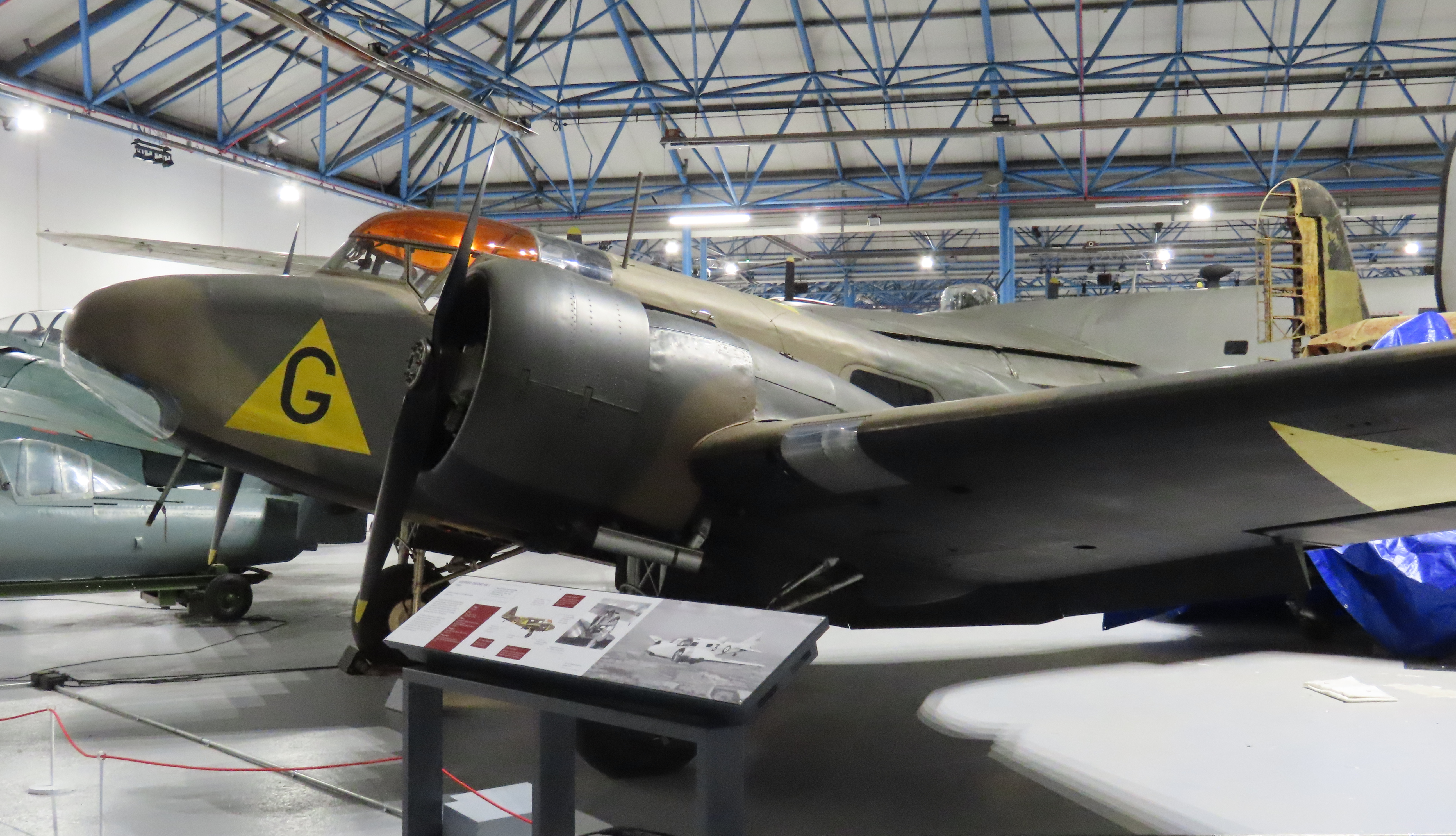
ⓘ licence & credit
Ad Meskens / CC BY-SA 4.0, via Wikimedia Commons — https://commons.wikimedia.org/wiki/File:London_RAF_Museum_Hendon_Airspeed_Oxford.jpg| Typical crew | 3 |
|---|---|
| Engines | 2 × Armstrong Siddeley Cheetah |
| First flight | 1937 |
| Number built | 8,751 |
About
The Airspeed Oxford was the RAF’s standard twin-engined advanced trainer of the Second World War, the aircraft on which a great many bomber and transport crews learned their trade. Developed from the Airspeed Envoy airliner to a 1936 requirement, it first flew in 1937 and was rushed into production as part of the pre-war expansion of the RAF.
The “Ox-box” was unusually versatile as a teaching machine: a single aircraft could carry pilot, navigator, bomb aimer, wireless operator and gunner stations, letting a whole crew train together. It became the mainstay trainer of the Empire Air Training Scheme, with thousands shipped to Canada, Australia, southern Africa and beyond. Powered by two Armstrong Siddeley Cheetah radials, it also served as a light transport, ambulance and radio/radar trainer. More than 8,500 were built, and the type remained in RAF use until 1956.
Sources: This page was compiled from publicly available historical sources, including Airspeed Oxford 1 — RAF Museum and Airspeed Oxford — Wikipedia. The text is original and has been written from factual source material; no source text has been copied unless specifically quoted and attributed.
Engines
- Armstrong Siddeley Cheetah — 7-cylinder air-cooled radial, 13.65 litres