
Miles Master
Trainer · Miles Aircraft · United Kingdom
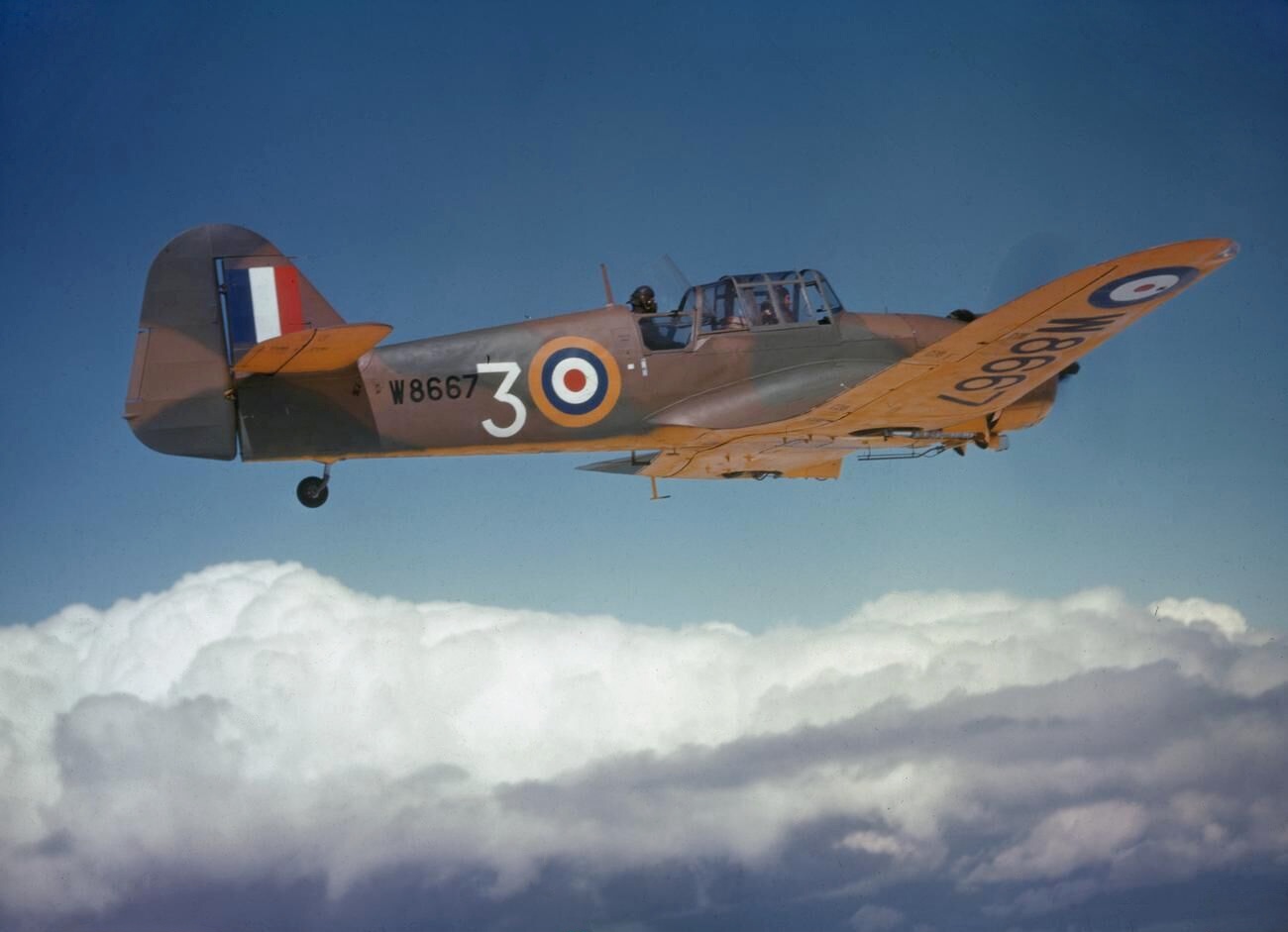
ⓘ licence & credit
British official photographer / Public domain, via Wikimedia Commons — https://commons.wikimedia.org/wiki/File:Miles_M.27_Master_MkIII_W8667,_No.5_SFTS._IWM-COL198.jpg| Typical crew | 2 |
|---|---|
| Engines | 1 × Rolls-Royce Kestrel or Bristol Mercury |
| First flight | 1939 |
| Number built | 3,450 |
Photographs
ⓘ licence & credit
War Office official photographer, Lockeyear W T (Lt) / Public domain, via Wikimedia Commons — https://commons.wikimedia.org/wiki/File:Royal_Air_Force_Fighter_Command,_1939-1945_H9190.jpgView source & full licence →ⓘ licence & credit
Miller (Flt Lt), Royal Air Force official photographer / Public domain, via Wikimedia Commons — https://commons.wikimedia.org/wiki/File:RAF_Manby_-_Royal_Air_Force_Flying_Training_Command,_1940-1945_CH14880.jpgView source & full licence →ⓘ licence & credit
photo:Unknown authorUnknown author scan:Keith Edkins / Public domain, via Wikimedia Commons — https://commons.wikimedia.org/wiki/File:Miles_Master.jpgView source & full licence →ⓘ licence & credit
British official photographer / Public domain, via Wikimedia Commons — https://commons.wikimedia.org/wiki/File:Miles_M.27_Master_MkIII_W8667,_No.5_SFTS._IWM-COL198.jpgView source & full licence →ⓘ licence & credit
Chetwyn L (Lt), War Office official photographer / Public domain, via Wikimedia Commons — https://commons.wikimedia.org/wiki/File:Basuto_%27hangar_boys%27_clean_and_polish_a_Miles_Master_at_No._23_Air_School_at_Waterkloof_in_Pretoria,_South_Africa,_January_1943._TR1255.jpgView source & full licence →ⓘ licence & credit
War Office official photographer, Bebbington E (Private) / Public domain, via Wikimedia Commons — https://commons.wikimedia.org/wiki/File:Aircraft_of_the_Royal_Air_Force_1939-1945-_Miles_M.9b-m.19_Master._H31737.jpgView source & full licence →ⓘ licence & credit
Royal Air Force official photographer / Public domain, via Wikimedia Commons — https://commons.wikimedia.org/wiki/File:Aircraft_of_the_Royal_Air_Force_1939-1945-_Miles_M.9b-m.19_Master._E(MOS)1218.jpgView source & full licence →ⓘ licence & credit
Royal Air Force official photographer, Woodbine G (Flying Officer) / Public domain, via Wikimedia Commons — https://commons.wikimedia.org/wiki/File:Aircraft_of_the_Royal_Air_Force_1939-1945-_Miles_M.9b-m.19_Master._CH6473.jpgView source & full licence →ⓘ licence & credit
Stanley Devon / Public domain, via Wikimedia Commons — https://commons.wikimedia.org/wiki/File:Aircraft_of_the_Royal_Air_Force_1939-1945-_Miles_M.9b-m.19_Master._CH1089.jpgView source & full licence →ⓘ licence & credit
San Diego Air & Space Museum Archives / Public domain, via Wikimedia Commons — https://commons.wikimedia.org/wiki/File:15_Miles_Master_II_(15216625273).jpgView source & full licence →About
The Miles Master was the RAF’s principal advanced trainer for fighter pilots, designed to bridge the gap between gentle basic trainers and front-line monoplane fighters. Miles built it to match the handling and performance of the Supermarine Spitfire and Hawker Hurricane, so that a pupil who could master the Master would be ready for the real thing.
A sleek two-seat monoplane with the instructor seated higher behind the pupil for a clear view, it was strong, fully aerobatic and pleasantly fast. Early aircraft used surplus Rolls-Royce Kestrel engines; later marks took the Bristol Mercury radial and, in another version, the American Pratt & Whitney Twin Wasp. Fitted with provision for guns and light practice bombs, it could also teach gunnery and ground attack. Around 3,200 were built, yet — a fate it shares with the Miles trainers generally — no complete example survives today.
Sources: This page was compiled from publicly available historical sources, including Miles Master — Wikipedia and Today in Aviation History: First Flight of the Miles Master — Vintage Aviation News. The text is original and has been written from factual source material; no source text has been copied unless specifically quoted and attributed.
Engines
- Bristol Mercury — 9-cylinder single-row air-cooled radial
- Rolls-Royce Kestrel — 60° liquid-cooled V12, 21.25 litres