
Armstrong Whitworth Whitley
Heavy bomber · Armstrong Whitworth · United Kingdom
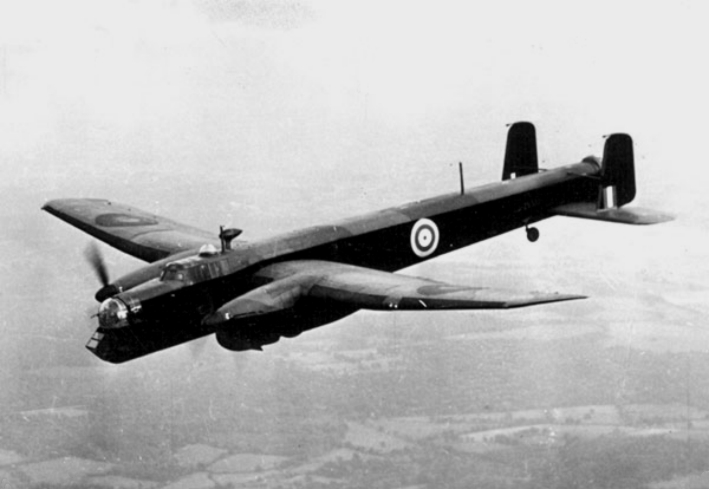
ⓘ licence & credit
RAF (via Wikimedia Commons, Public domain)| Typical crew | 5 |
|---|---|
| Engines | 2 × Rolls-Royce Merlin |
| First flight | 1936 |
| Number built | 1,814 |
Photographs
ⓘ licence & credit
Stanley Devon / Public domain, via Wikimedia Commons — https://commons.wikimedia.org/wiki/File:Aircraft_of_the_Royal_Air_Force_1939-1945-_Armstrong_Whitworth_Aw.38_Whitley._CH1218.jpgView source & full licence →ⓘ licence & credit
Stanley Devon / Public domain, via Wikimedia Commons — https://commons.wikimedia.org/wiki/File:Aircraft_of_the_Royal_Air_Force_1939-1945-_Armstrong_Whitworth_Aw.38_Whitley._CH1216.jpgView source & full licence →ⓘ licence & credit
RAF / Public domain, via Wikimedia Commons — https://commons.wikimedia.org/wiki/File:Armstrong_Whitworth_III_tug_on_ground.jpgView source & full licence →ⓘ licence & credit
Daventry B J (Flying Officer), Royal Air Force official photographer / Public domain, via Wikimedia Commons — https://commons.wikimedia.org/wiki/File:Aircraft_of_the_Royal_Air_Force_1939-1945-armstrong_Whitworth_Aw.38_Whitley_C928.jpgView source & full licence →ⓘ licence & credit
Hensser H (Mr), Royal Air Force official photographer / Public domain, via Wikimedia Commons — https://commons.wikimedia.org/wiki/File:Aircraft_of_the_Royal_Air_Force_1939-1945-_Armstrong_Whitworth_Whitley._CH4450.jpgView source & full licence →ⓘ licence & credit
Royal Air Force official photographer / Public domain, via Wikimedia Commons — https://commons.wikimedia.org/wiki/File:Aircraft_of_the_Royal_Air_Force_1939-1945-_Armstrong_Whitworth_Aw.38_Whitley._CH6055.jpgView source & full licence →ⓘ licence & credit
Royal Air Force official photographer / Public domain, via Wikimedia Commons — https://commons.wikimedia.org/wiki/File:Air_Ministry_Second_World_War_Official_Collection_CH401.jpgView source & full licence →ⓘ licence & credit
Taylor (Mr), War Office official photographer / Public domain, via Wikimedia Commons — https://commons.wikimedia.org/wiki/File:A_parachute_soldier_demonstrates_the_exit_point_from_the_tail_of_a_Whitley_bomber_converted_to_parachute-dropping,_RAF_Ringway,_January_1941._H6531.jpgView source & full licence →ⓘ licence & credit
Malindine E G (Lt) Puttnam L (Lt) Taylor (Lt) War Office official photographer. / Public domain, via Wikimedia Commons — https://commons.wikimedia.org/wiki/File:6th_Parachute_Battalion.jpgView source & full licence →ⓘ licence & credit
Malindine E G (Lt) Puttnam L (Lt) Spender H (Lt) War Office official photographer. / Public domain, via Wikimedia Commons — https://commons.wikimedia.org/wiki/File:6th_(Royal_Welch)_Parachute_Battalion_training.jpgView source & full licence →ⓘ licence & credit
Daventry B J (Mr) : Royal Air Force official photographer / Public domain, via Wikimedia Commons — https://commons.wikimedia.org/wiki/File:58_Squadron_Whitley_at_RAF_Linton-on-Ouse_WWII_IWM_CH_226.jpgView source & full licence →ⓘ licence & credit
not stated / Public domain, via Wikimedia Commons — https://commons.wikimedia.org/wiki/File:455_Squadron_RAAF_Hampden_at_RAF_Wigsley_circa_1942_AWM_SUK10370.jpgView source & full licence →ⓘ licence & credit
Royal Air Force official photographer / Public domain, via Wikimedia Commons — https://commons.wikimedia.org/wiki/File:102_Squadron_Whitley_at_RAF_Topcliffe_WWII_IWM_CH_2052.jpgView source & full licence →ⓘ licence & credit
Emoscopes 20:59, 7 April 2008 (UTC) / CC BY 3.0, via Wikimedia Commons — https://commons.wikimedia.org/wiki/File:British_WW2_medium_bombers_comparison.pngView source & full licence →ⓘ licence & credit
Emoscopes / CC BY 3.0, via Wikimedia Commons — https://commons.wikimedia.org/wiki/File:Armstrong_Whitworth_Whitley.pngView source & full licence →About
The Armstrong Whitworth Whitley was conceived from the start as a night bomber, and that decision shaped its war. Built to a 1934 requirement, the prototype flew from Baginton in March 1936, and No. 10 Squadron began converting to the type in 1937. Unlike the day-bomber Hampden and Wellington, the Whitley avoided the heavy daylight losses of the war’s opening months because it operated under cover of darkness.
Early marks used Armstrong Siddeley Tiger radials; the definitive Mk V adopted Rolls-Royce Merlins. A distinctive high wing incidence left it flying markedly nose-down in the cruise. The Whitley chalked up a string of firsts — the first British bombs on German soil in May 1940, the first raid on Berlin that August, and the first attack on Italy. Withdrawn from front-line bombing in 1942, it carried on as a glider tug, paratroop trainer and Coastal Command patroller.
Sources: This page was compiled from publicly available historical sources, including Armstrong Whitworth A.W.38 Whitley — historyofwar.org and Armstrong Whitworth Whitley — Wikipedia. The text is original and has been written from factual source material; no source text has been copied unless specifically quoted and attributed.
Engines
- Rolls-Royce Merlin — 60° liquid-cooled supercharged V12, 27 litres