

- Born
- 1 July 1916, Catford, London
- Died
- 5 May 1987, aged 70
- Fate
- Served and survived
Biography
Wing Commander Robert Roland Stanford “Bob” Tuck was one of the RAF’s outstanding fighter aces of the early war, credited with some 27 enemy aircraft destroyed.
Born at Catford in south London on 1 July 1916, he joined the RAF in 1935 and first saw heavy fighting over Dunkirk and in the Battle of Britain, flying Spitfires and later commanding No. 257 Squadron on Hurricanes. A dashing and superstitious pilot — he carried a set of lucky charms and survived several brushes with death — he won the Distinguished Service Order and the Distinguished Flying Cross three times over.
On 28 January 1942, leading a low-level “Rhubarb” sweep near Boulogne, his Spitfire was brought down by anti-aircraft fire and he was captured. He spent the rest of the war as a prisoner, much of it at Stalag Luft III, where he was drawn into the escape organisation. In February 1945, as the camp was marched west, he slipped away with a Polish fellow prisoner and made his way to the advancing Soviet lines, eventually reaching home. He survived the war and died in Kent on 5 May 1987, aged 70.
Sources: This page was compiled from publicly available historical sources, including Imperial War Museums — Johnnie Johnson and Wikipedia — Robert Stanford Tuck. The text is original and has been written from factual source material; no source text has been copied unless specifically quoted and attributed.
Prisoner of war
-
Stalag Luft III
— Escaped
Fighter ace shot down and captured January 1942; held at Stalag Luft III, escaped during the westward march in early 1945 and reached Allied lines.
Timeline
-
1 July 1916
Born
Catford, London -
5 May 1987
Died
aged 70
Awards
-
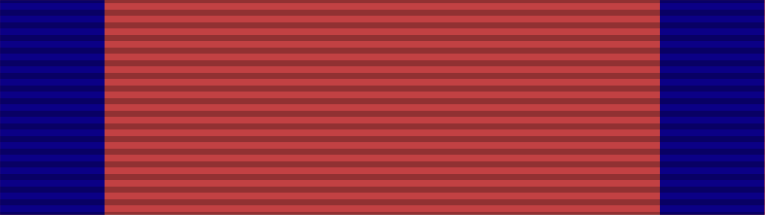 Distinguished Service Order (DSO)
Distinguished Service Order, for leadership and success in air combat.
-
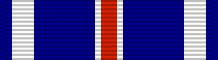 Distinguished Flying Cross (DFC)
Distinguished Flying Cross with two Bars.
-
Distinguished Flying Cross (United States) (US DFC)
United States Distinguished Flying Cross.