
Vickers Wellesley
Light bomber · Vickers-Armstrongs · United Kingdom
ⓘ licence & credit
(via Wikimedia Commons, Public domain)| Typical crew | 2 |
|---|---|
| Engines | 1 × Bristol Pegasus |
| First flight | 1935 |
| Number built | 177 |
Photographs
ⓘ licence & credit
Emoscopes / CC BY 3.0, via Wikimedia Commons — https://commons.wikimedia.org/wiki/File:Vickers_Wellesley.pngView source & full licence →ⓘ licence & credit
Public domain, via Wikimedia Commons — https://commons.wikimedia.org/wiki/File:Vickers_Wellesley.jpgView source & full licence →ⓘ licence & credit
Royal Air Force official photographer / Public domain, via Wikimedia Commons — https://commons.wikimedia.org/wiki/File:Vickers_Wellesley_MKI.jpgView source & full licence →ⓘ licence & credit
Royal Air Force official photographer / Public domain, via Wikimedia Commons — https://commons.wikimedia.org/wiki/File:Vickers_Wellesley_Mk_I_of_No._47_Squadron_RAF_in_flight_over_the_mountains_of_Eritrea,_1941._ME(RAF)845.jpgView source & full licence →ⓘ licence & credit
Royal Air Force official photographer, Hensser (Mr) / Public domain, via Wikimedia Commons — https://commons.wikimedia.org/wiki/File:Vickers_Wellesley_Mk_I_of_No._47_Squadron_on_a_bombing_mission_to_Keren,_Eritrea,_2_April_1941._CM645.jpgView source & full licence →ⓘ licence & credit
neznámý (unknown) / Public domain, via Wikimedia Commons — https://commons.wikimedia.org/wiki/File:Vickers_Wellesley_a_Walter_Pegas_X.jpgView source & full licence →ⓘ licence & credit
Official photographer / Public domain, via Wikimedia Commons — https://commons.wikimedia.org/wiki/File:Vickers_Wellesley_2.jpgView source & full licence →ⓘ licence & credit
Royal Air Force official photographer / Public domain, via Wikimedia Commons — https://commons.wikimedia.org/wiki/File:Vickers_Wellesley_-_Sudan_-_Royal_Air_Force_-_East_Africa_Command,_1940-1945_ME(RAF)889.jpgView source & full licence →ⓘ licence & credit
Hensser H (Mr), Royal Air Force official photographer / Public domain, via Wikimedia Commons — https://commons.wikimedia.org/wiki/File:Pilot_officer_Kennedy_of_47_Squadron_RAF_Mar_1941_IWM_CM_658.jpgView source & full licence →ⓘ licence & credit
FOTO:Fortepan — ID 54183: Adományozó/Donor: Nagy Gyula. archive copy at the Wayback Machine / CC BY-SA 3.0, via Wikimedia Commons — https://commons.wikimedia.org/wiki/File:Croydon_rep%C3%BCl%C5%91t%C3%A9r._Fortepan_54183.jpgView source & full licence →ⓘ licence & credit
Royal Air Force official photographer / Public domain, via Wikimedia Commons — https://commons.wikimedia.org/wiki/File:Aircraft_of_the_Royal_Air_Force_1939-1945-_Vickers_Wellesley._MH135.jpgView source & full licence →ⓘ licence & credit
Unknown authorUnknown author / Public domain, via Wikimedia Commons — https://commons.wikimedia.org/wiki/File:AIRCRAFT_OF_THE_ROYAL_AIR_FORCE_1919-1939_H(AM)379.jpgView source & full licence →ⓘ licence & credit
Hensser (Mr), Royal Air Force official photographer / Public domain, via Wikimedia Commons — https://commons.wikimedia.org/wiki/File:47_Squadron_RAF_Wellesley_over_Eritrea_WWII_IWM_CM_645.jpgView source & full licence →ⓘ licence & credit
San Diego Air & Space Museum Archives / Public domain, via Wikimedia Commons — https://commons.wikimedia.org/wiki/File:15_Vickers_Wellesley_Bristol_Pegasus_(15650911647).jpgView source & full licence →About
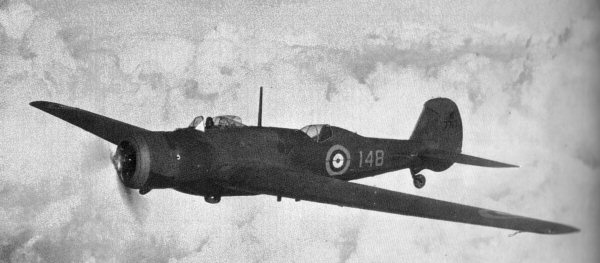
The Vickers Wellesley was the first aircraft to take Barnes Wallis’s geodetic construction into RAF service, the forerunner of the method that would make the later Vickers Wellington so tough. A single-engined monoplane built to a 1930s specification, it carried its bombs in streamlined panniers slung beneath the wings, because designers were unsure how the lattice airframe would cope with a conventional internal bomb bay.
The Wellesley’s most spectacular feat was a record-breaking one: in November 1938 three of them flew non-stop from Egypt to Australia, over 7,000 miles, setting a world long-distance record that showcased the efficiency of its very high-aspect-ratio wing. Obsolete as a bomber by 1939 and withdrawn from home squadrons, it nonetheless saw real action in the East African campaign of 1940–41, flying raids against Italian forces in Eritrea and Ethiopia from bases in the Middle East.
Sources: This page was compiled from publicly available historical sources, including Vickers Wellesley — BAE Systems Heritage and Vickers Wellesley — Wikipedia. The text is original and has been written from factual source material; no source text has been copied unless specifically quoted and attributed.
Engines
- Bristol Pegasus — 9-cylinder single-row air-cooled radial