
Consolidated Liberator
Heavy bomber · Consolidated Aircraft · United States
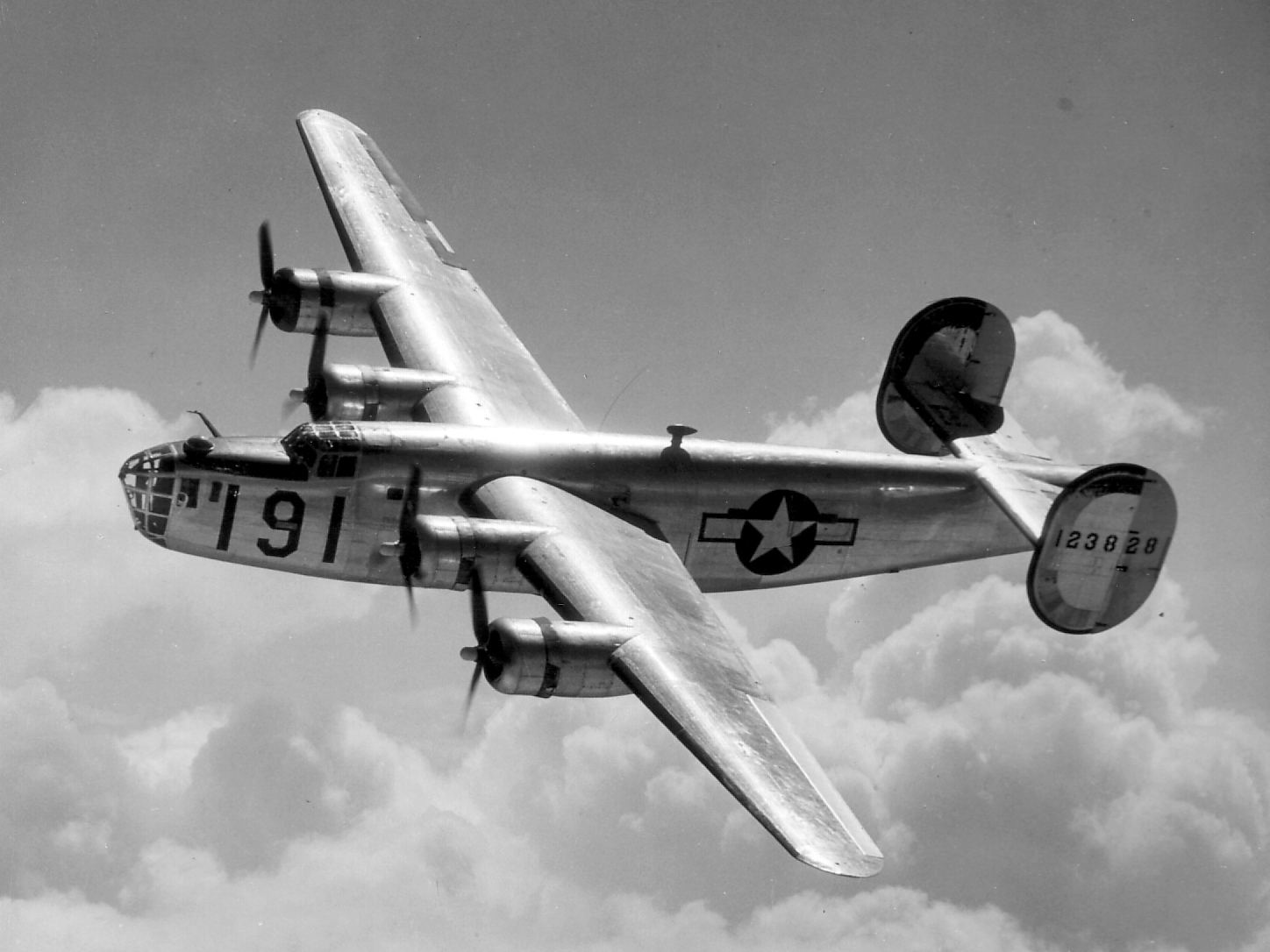
ⓘ licence & credit
U.S. Air Force photos (via Wikimedia Commons, Public domain)| Typical crew | 10 |
|---|---|
| Engines | 4 × Pratt & Whitney Twin Wasp |
| First flight | 1939 |
| Number built | 18,482 |
Photographs
ⓘ licence & credit
San Diego Air & Space Museum Archives / Public domain, via Wikimedia Commons — https://commons.wikimedia.org/wiki/File:01_00095304_SDASM_Aircraft_Image_-_Consolidated_B-24_(53958953374).jpgView source & full licence →About
The Consolidated Liberator made its greatest mark with the RAF not as a bomber but as a submarine hunter. Early B-24s bought for Britain were judged unsuitable for the bombing war over Europe, but their exceptional range made them ideal for maritime patrol. Converted at Prestwick with ASV radar and a battery of forward-firing cannon, they entered Coastal Command service as the Liberator GR.I.
The type’s decisive contribution was closing the “Mid-Atlantic Gap” — the stretch of ocean beyond the reach of other shore-based aircraft, where U-boats had hunted convoys with impunity. From 1941 the few Very Long Range Liberators of No. 120 Squadron provided the only air cover there, and equipped with the Leigh light and depth charges they could attack submarines by day or night. The Liberator served Coastal Command, Bomber Command’s overseas squadrons and transport units alike, with more B-24s built than any other American aircraft of the war.
Sources: This page was compiled from publicly available historical sources, including Consolidated B-24 Liberator — Wikipedia and Consolidated Liberator I — Wikipedia. The text is original and has been written from factual source material; no source text has been copied unless specifically quoted and attributed.
Airframes in this database
| Serial | Code | Squadron | Fate |
|---|---|---|---|
| BZ832 | D | — | Lost on operations |