

George Corbett Bayley
Pilot Officer · 113343 · United Kingdom
- Died
- 29 July 1942, aged 23
- Fate
- Killed in action
Biography
George Corbett Bayley was a twenty-three-year-old Pilot Officer in the Royal Air Force Volunteer Reserve who flew with Bomber Command during the Second World War. He served as a pilot at No. 1651 Heavy Conversion Unit, 3 Group, based at RAF Waterbeach in Cambridgeshire, where crews converted onto the four-engined Short Stirling heavy bomber. Before reaching the conversion unit he had flown operations against the German warships Gneisenau and Scharnhorst during their long lay-up at Brest: he pressed home attacks on multiple occasions in the face of fierce anti-aircraft fire, sustaining damage to his aircraft on three separate sorties, and was awarded the Distinguished Flying Cross in recognition of the courage, skill, and determination he displayed throughout those raids — his citation, gazetted on 20 January 1942, was shared with his navigator, Flying Officer Arthur George MacLeod. On the night of 28/29 July 1942 Bayley took off at 23:30 hours aboard Short Stirling I N3655, coded BS-T, as part of a force dispatched to Hamburg; homeward bound, the aircraft was struck by German anti-aircraft fire and came down near Oslebshausen on the eastern bank of the River Weser at approximately 02:45 hours, killing Bayley and all six members of his crew. He was the son of Herbert Bell Bayley and Nancy Bayley, and is buried at Becklingen War Cemetery in Germany, grave 26.J.3.
Burial / commemoration
- Cemetery
- Becklingen War Cemetery, Germany
Operations on this date. 2 raids in this archive were flown on the night of 29 July 1942: Hamburg · Saarbrücken. (Cross-reference by date — not in itself confirmation this airman flew it.)
Timeline
-
20 January 1942
Gazetted: DFC
Distinguished Flying Cross -
29 July 1942
Died
aged 23
Awards
-
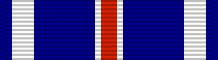
Distinguished Flying Cross (DFC) — gazetted 20 January 1942