

- Died
- 19 September 1942, aged 27
- Fate
- Killed in action
Biography
Norman Henry Edward Messervy was an Australian airman who served in the Royal Air Force during the Second World War, reaching the acting rank of Squadron Leader. He first distinguished himself as a pilot with No. 3 Photographic Reconnaissance Unit, where his work over enemy territory earned him the Distinguished Flying Cross, gazetted on 19 December 1941. By 1942 he had moved to No. 105 Squadron, one of the RAF’s pioneering Mosquito bomber units operating from Horsham St. Faith and engaged in daring high-speed daylight strikes deep into occupied Europe. On 19 September 1942 Messervy flew Mosquito IV DK326 on what was the first RAF daylight raid to reach Berlin, one of six crews dispatched; his aircraft was intercepted on the return leg and shot down by a Focke-Wulf 190, crashing south of Ankum in Lower Saxony — he was twenty-seven years old. He was survived by his wife Elizabeth, of Orpington in Kent, and by his parents Henry Edward and Vesta Messervy in Australia. He is buried at Rheinberg War Cemetery in Germany, grave reference 9.D.23.
Burial / commemoration
- Cemetery
- Rheinberg War Cemetery, Germany
Operations on this date. 2 raids in this archive were flown on the night of 19 September 1942: Munich · Saarbrücken. (Cross-reference by date — not in itself confirmation this airman flew it.)
Timeline
-
19 December 1941
Gazetted: DFC
Distinguished Flying Cross -
19 September 1942
Lost in de Havilland Mosquito DK326
Other -
19 September 1942
Died
aged 27
Crew & operations
Flew as Other with No. 105 Squadron.
- Lost on DK326 (de Havilland Mosquito) — Failed to return
Crew: Frank Holland (Other)
Awards
-
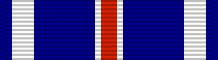 Distinguished Flying Cross (DFC) — gazetted 19 December 1941