

John Theodore Bouwens
Squadron Leader · 37552 · United Kingdom
- Died
- 22 April 1942, aged 25
- Fate
- Killed in action
Biography
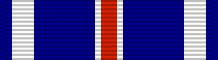
John Theodore Bouwens was a British RAF officer, born around 1917, who rose to the rank of Acting Squadron Leader during the Second World War. He held a permanent commission in the Royal Air Force and was serving with No. 51 Squadron — a night bombing unit equipped with Armstrong Whitworth Whitleys and based at RAF Dishforth in Yorkshire — when the Distinguished Flying Cross was gazetted in his name on 23 September 1941, recognising his operational service over enemy territory; no citation text was published with the announcement. By the time of his decoration he had accumulated sufficient operational experience to be appointed Commanding Officer of No. 76 Squadron, one of the first Halifax heavy bomber units in 4 Group, Bomber Command. In early 1942 he was posted to the Far East, where No. 11 Squadron RAF was operating Bristol Blenheim IVs from Ceylon in response to the Japanese advance into South-East Asia. On 22 April 1942, aged twenty-five, Bouwens was piloting Blenheim IV Z7506 when the aircraft flew into a hill in bad weather near Galkanda, Ceylon, and was destroyed by fire; his two crew members, Flight Sergeant Arthur Peter Griffiths and Flight Sergeant David Fisher, also perished. He is buried at Kandy War Cemetery, Sri Lanka, in grave 7. A. 10.
Burial / commemoration
- Cemetery
- Kandy War Cemetery, Sri Lanka
Operations on this date. One raid in this archive was flown on the night of 22 April 1942: Cologne. (Cross-reference by date — not in itself confirmation this airman flew it.)
Timeline
-
23 September 1941
Gazetted: DFC
Distinguished Flying Cross -
22 April 1942
Died
aged 25
Awards
-
Distinguished Flying Cross (DFC) — gazetted 23 September 1941