

Richard John Wells
Wing Commander · 39918 · United Kingdom
- Died
- 16 March 1942, aged 28
- Fate
- Killed in action
Biography
Richard John Wells was born around 1913–1914, the son of Richard Alexander and Ada Wells of Diss, Norfolk, and was commissioned into the Royal Air Force as a Pilot Officer in December 1939. He rose to the rank of Wing Commander and took command of No. 108 Squadron, a night bomber unit that reformed at RAF Kabrit, Egypt, in August 1941 and flew Vickers Wellington sorties against ports and installations along the Libyan and Greek coasts. His leadership of the squadron was recognised by the award of the Distinguished Flying Cross, gazetted on 14 October 1941, the citation crediting him with organising and directing the unit’s sorties while personally participating in fifteen of them; he was subsequently awarded a Bar to the DFC and a Mention in Despatches. On 11 January 1942 Wells captained the only Liberator II on the squadron’s attack on Tripoli Harbour — the first operational sortie flown by a Consolidated Liberator aircraft in the Middle East theatre — and reported the type’s long range as making it “the ideal bomber for long-range bombing of the enemy.” He was killed on 16 March 1942, aged 28, when Liberator II AL577, carrying his crew and a number of ferry passengers homeward from Egypt to RAF Hurn, Dorset, ran short of fuel in deteriorating weather, veered off course over Ireland and crashed into the Cooley Peninsula near Dundalk, Co. Louth, killing fifteen of the nineteen people on board. He is buried at Diss Cemetery, Norfolk, Section H, Grave 44.
Burial / commemoration
- Cemetery
- Diss Cemetery, United Kingdom
Timeline
-
14 October 1941
Gazetted: DFC
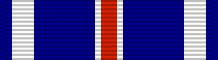
Distinguished Flying Cross -
16 March 1942
Died
aged 28
Awards
-
Distinguished Flying Cross (DFC) — gazetted 14 October 1941