
RAF Gravely
ⓘ licence & credit
Public domain, via Wikimedia Commons — https://commons.wikimedia.org/wiki/File:Halifax-mk3.jpgAbout
RAF Graveley opened on 1 March 1942 a few miles south of Huntingdon, in what is now Cambridgeshire (formerly part of Huntingdonshire). It began as a bomber station, briefly hosting No. 161 Squadron and its Westland Lysanders flown on clandestine agent-dropping work, but its lasting identity came after it transferred to No. 8 (Pathfinder Force) Group.
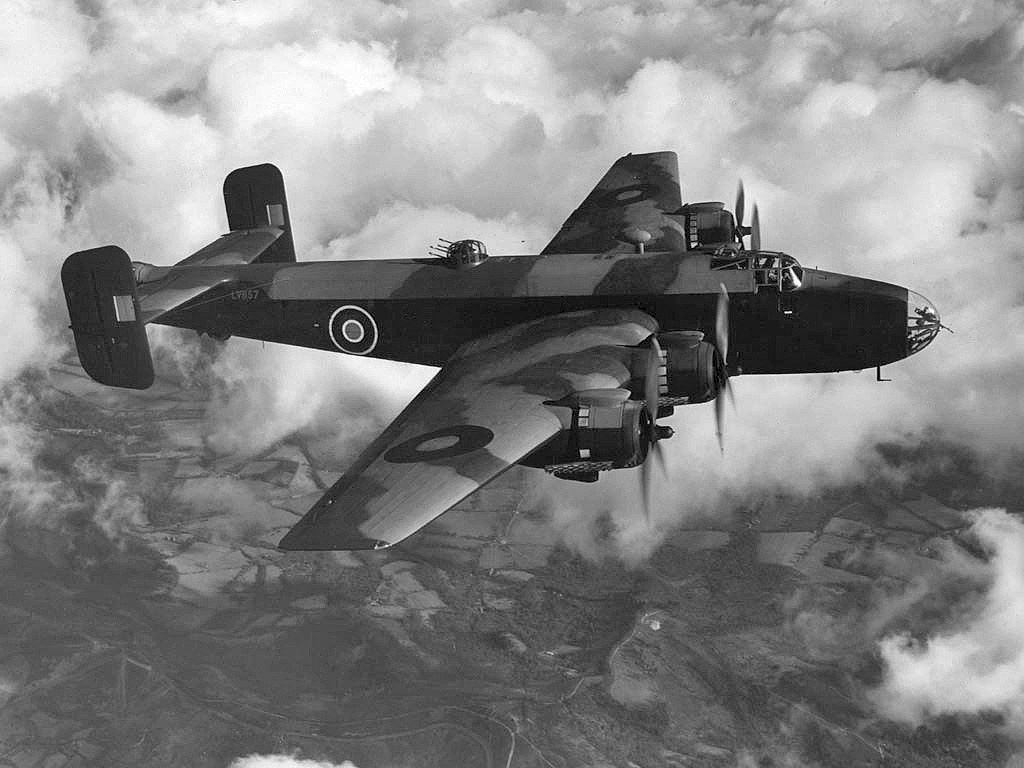
The airfield’s principal unit was No. 35 Squadron, which flew Handley Page Halifax heavy bombers from 1942 and converted to Avro Lancasters in 1944. As a Pathfinder base, Graveley’s crews marked targets ahead of the main bomber stream on raids over occupied Europe and Germany. From 1944 the station also operated de Havilland Mosquitoes of No. 692 Squadron on high-speed light-bomber sorties.
Graveley was among the first stations equipped with FIDO, the fuel-burning fog-dispersal system that cleared mist from the runway to let returning aircraft land safely in poor visibility. Wartime aircrew here included the future Marshal of the Royal Air Force Sir Michael Beetham, who joined No. 35 Squadron in late 1945.
After the war the site served as a relief landing ground for flying training units linked to RAF Oakington before closing in December 1968. The land has since reverted largely to agriculture, with scattered wartime structures surviving and a wind farm built on part of the former airfield.
Sources: This page was compiled from publicly available historical sources, including Airfields of Britain Conservation Trust — Graveley and Wikipedia: RAF Graveley. The text is original and has been written from factual source material; no source text has been copied unless specifically quoted and attributed.
No people are cross-referenced to this airfield yet. Links appear as squadron postings, crews and service records are added.