
No. 101 Squadron
ⓘ licence & credit
Royal Air Force (Public domain), via Wikimedia Commons- Group
- 1 Group
- Home station
- RAF Ludford Magna
About
No. 101 Squadron flew in No. 1 Group of Bomber Command, converting from the Vickers Wellington to the Avro Lancaster in the autumn of 1942 and operating from Lincolnshire for the rest of the war. From late 1943 it took on a singular and dangerous role alongside its ordinary bombing duties: its Lancasters were fitted with the secret “Airborne Cigar” (ABC) equipment, used to jam the radio channels by which German night-fighter controllers directed their aircraft.
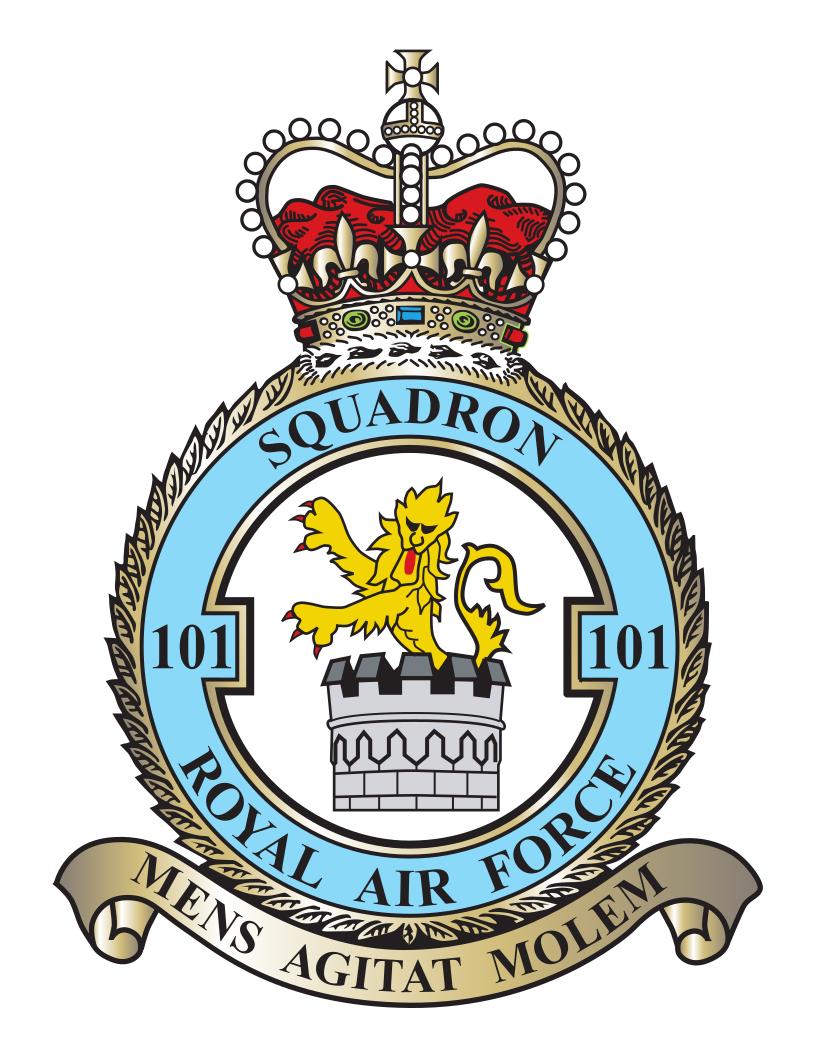
Each ABC aircraft carried an extra, German-speaking crew member to listen for the controllers’ instructions and blot them out — and sometimes to impersonate them and sow confusion. Because the jammers had to fly on every major raid and their transmissions could be tracked, the squadron suffered some of the highest losses in Bomber Command. Its motto, Mens agitat molem, means “mind over matter”. After the war No. 101 flew the Avro Lincoln and became the first RAF squadron to operate the English Electric Canberra jet bomber.
Sources: This page was compiled from publicly available historical sources, including Air of Authority (rafweb.org) — No. 101 Squadron history and Wikipedia: No. 101 Squadron RAF. The text is original and has been written from factual source material; no source text has been copied unless specifically quoted and attributed.
Photographs
ⓘ licence & credit
Sgt Pete Mobbs RAF / OGL v1.0, via Wikimedia Commons — https://commons.wikimedia.org/wiki/File:Tornado_Refuelling_MOD_45150107.jpgView source & full licence →ⓘ licence & credit
SAC Sally Raimondo / OGL v1.0, via Wikimedia Commons — https://commons.wikimedia.org/wiki/File:Canadian_F-18_aircraft_awaiting_refuelling_from_a_Royal_Air_Force_VC10_K3_tanker_of_101_Squadron_RAF_during_Op_Ellamy,_2011_MOD_45155224.jpgView source & full licence →ⓘ licence & credit
Ronnie Macdonald from Chelmsford, United Kingdom / CC BY 2.0, via Wikimedia Commons — https://commons.wikimedia.org/wiki/File:BAC_VC10_K3_5_(7570369098).jpgView source & full licence →ⓘ licence & credit
Ronnie Macdonald from Chelmsford, United Kingdom / CC BY 2.0, via Wikimedia Commons — https://commons.wikimedia.org/wiki/File:BAC_VC10_K3_4_(7570365862).jpgView source & full licence →ⓘ licence & credit
RuthAS / CC BY 3.0, via Wikimedia Commons — https://commons.wikimedia.org/wiki/File:Avro_698_Vulcan_B.2A_101_Sq_FINN_30.07.77_edited-4.jpgView source & full licence →ⓘ licence & credit
Royal Air Force official photographer / Public domain, via Wikimedia Commons — https://commons.wikimedia.org/wiki/File:Royal_Air_Force_Bomber_Command,_1942-1945._CE135.jpgView source & full licence →ⓘ licence & credit
Royal Air Force official photographer / Public domain, via Wikimedia Commons — https://commons.wikimedia.org/wiki/File:Air_Ministry_Second_World_War_Official_Collection_CE133.jpgView source & full licence →ⓘ licence & credit
Alf Beard / CC BY-SA 2.0, via Wikimedia Commons — https://commons.wikimedia.org/wiki/File:101_Squadron_R.A.F._Memorial._-_geograph.org.uk_-_7439040.jpgView source & full licence →ⓘ licence & credit
Alf Beard / CC BY-SA 2.0, via Wikimedia Commons — https://commons.wikimedia.org/wiki/File:101_Squadron_R.A.F._Memorial_-_geograph.org.uk_-_7439031.jpgView source & full licence →Operations flown
- Operation Nuremberg raid — 30 March 1944 (Nuremberg)
Aircraft (8)
| Serial | Code | Type | Fate |
|---|---|---|---|
| DV245 | SR-S | Avro Lancaster | Lost on operations |
| DV264 | SR-L | Avro Lancaster | Lost on operations |
| DV276 | SR-R | Avro Lancaster | Lost on operations |
| DV290 | SR-X | Avro Lancaster | Lost on operations |
| LL832 | SR-K2 | Avro Lancaster | Lost on operations |
| LL861 | SR-H | Avro Lancaster | Lost on operations |
| LM463 | SR-K | Avro Lancaster | Lost on operations |
| ME618 | SR-J | Avro Lancaster | Lost on operations |
No service records linked to this squadron yet. Aircraft, crews and sorties will appear here soon.
Further reading & sources
External sites — facts only are reused here; their text and images remain their authors'.