
No. 2 Squadron
Hereward – Guardian of the Army
ⓘ licence & credit
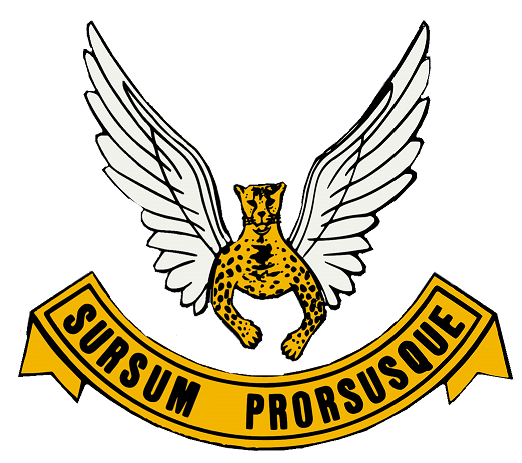
Caracal Rooikat (CC BY-SA 4.0), via Wikimedia Commons- Group
- 35 Wing
- Command
- Army Cooperation / AOP
- Home station
- RAF Sawbridgeworth
- Formed
- 13 May 1912
In the database: 2 aircraft · 2 service members · 1 sortie.
History
No. II (Army Co-operation) Squadron RAF is one of the oldest flying units in the world, formed at Farnborough on 13 May 1912 as part of the original Royal Flying Corps. At the outbreak of the Second World War the squadron was equipped with Westland Lysanders in the army co-operation role and deployed to France with the British Expeditionary Force, evacuating in May 1940 following the German offensive. Based principally at RAF Sawbridgeworth in Hertfordshire, it transitioned through Curtiss Tomahawks from August 1941 into North American Mustangs from April 1942, flying low-level tactical reconnaissance sorties over occupied France and the Low Countries. Prior to D-Day the squadron conducted surveys of the Atlantic Wall defences, returning to the Continent in July 1944 as part of the 2nd Tactical Air Force under 35 Wing, advancing with the 21st Army Group through Normandy, the Netherlands and into Germany. Supermarine Spitfire XIVs arrived in November 1944, further improving high-speed reconnaissance capability as the front moved eastward. The squadron’s motto, “Hereward – Guardian of the Army”, reflects its enduring army co-operation heritage, a tradition carried by its badge bearing the wake knot of Hereward the Wake.
Stations operated from
Airfields this squadron flew from during the Second World War.
RAF Bekesbourne · RAF Bottisham · RAF Dundonald/gailes/fullarton/barassie · RAF Fowlmere · RAF Gatwick · RAF Gravesend · RAF Hatfield · RAF Hutton Cranswick · RAF Lympne · RAF North Weald · RAF Odiham · RAF Warmwell
Photographs
Royal Air Force Army Co-operation Command, 1940-1943. A pilot and an Army Liaison Officer examine prints of aerial reconnaissance photographs taken by No. 2 Squadron RAF in their Mobile Operations Room at Sawbridgeworth, Hertfordshire, while an airman of the Photographic Section examines a newly-developed roll of film.
ⓘ licence & credit
Daventry B J H (Fg Off), Royal Air Force official photographer / Public domain, via Wikimedia Commons — https://commons.wikimedia.org/wiki/File:Royal_Air_Force_Army_Co-operation_Command,_1940-1943._CH17418.jpgView source & full licence →Royal Air Force Army Co-operation Command, 1940-1943. Photographic staff transfer the film magazine of an Type F.24 aerial camera, mounted in the oblique position in a North American Mustang of No. 2 Squadron RAF, to its carrying case for rapid development by the Photographic Section, following a tactical reconnaissance training sortie, at Sawbridgeworth, Hertfordshire.
ⓘ licence & credit
Royal Air Force official photographer, Daventry B J (Fg Off) / Public domain, via Wikimedia Commons — https://commons.wikimedia.org/wiki/File:Royal_Air_Force_Army_Co-operation_Command,_1940-1943._CH17415.jpgView source & full licence →Royal Air Force Army Co-operation Command, 1940-1943. A North American Mustang of No. 2 Squadron RAF, takes off from Sawbridgeworth, Hertfordshire, past a Commer Q2 mobile wireless van providing air to ground communications. To the left, a De Havilland Dragon Rapide communications aircraft is parked in on o fhe dispersals.
ⓘ licence & credit
Daventry B J H (Fg Off), Royal Air Force official photographer / Public domain, via Wikimedia Commons — https://commons.wikimedia.org/wiki/File:Royal_Air_Force_Army_Co-operation_Command,_1940-1943._CH17402.jpgView source & full licence →Australian War Memorial summary: “Serny, France. 1918-11. Wing score board recording the results of various flying operations performed by No. 80 Wing RAF. The aircraft tally board was probably in the briefing room or mess of the base and appears to consist of chalk marks on a wall rather than a special board. It is dated 1918-07-01 to 1918-11-11. The squadrons listed are No. 4 Squadron, Australian Flying Corps (AFC), No. 88 Squadron RAF, No. 2 Squadron AFC, No. 92 Squadron RAF, No. 103 Squadron RAF, No. 46 Squadron RAF, and No. 54 Squadron RAF. The other columns are headed In Flames',Crashed’, O.O.C.' (Out of Control),Driven Down’ and `Balloons Destroyed’.”
ⓘ licence & credit
not stated / Public domain, via Wikimedia Commons — https://commons.wikimedia.org/wiki/File:AWM_P02163.016.jpgView source & full licence →A North-American Mustang Mark I, AL995 ‘XV-S’, of No. 2 Squadron RAF, undergoes an overhaul on its dispersal point at Sawbridgeworth, Hertfordshire, as another aircraft of the squadron overflys the airfield.
ⓘ licence & credit
Daventry B J (Fg Off), Royal Air Force official photographer / Public domain, via Wikimedia Commons — https://commons.wikimedia.org/wiki/File:2_Squadron_Mustangs_at_RAF_Sawbridgeworth_WWII_IWM_CH_17407.jpgView source & full licence →American Aircraft in Royalair Force Service 1939-1945- North American Na 73 and Na 102 Mustang. Mustang Mark I, AG456 ‘XV-B’, of No. 2 Squadron RAF, preparing to depart on a reconnaissance practice flight at Sawbridgeworth, Hertfordshire.
ⓘ licence & credit
Royal Air Force official photographer, Daventry B J (Fg Off) / Public domain, via Wikimedia Commons — https://commons.wikimedia.org/wiki/File:American_Aircraft_in_Royalair_Force_Service_1939-1945-_North_American_Na_73_and_Na_102_Mustang._CH17401.jpgView source & full licence →Royal Air Force Army Co-operation Command, 1940-1943. A North-American Mustang Mark I, AL995 ‘XV-S’, of No. 2 Squadron RAF, undergoes an overhaul on its dispersal point at Sawbridgeworth, Hertfordshire, as another aircraft of the squadron overflys the airfield.
ⓘ licence & credit
Royal Air Force official photographer, Daventry B J (Fg Off) / Public domain, via Wikimedia Commons — https://commons.wikimedia.org/wiki/File:Royal_Air_Force_Army_Co-operation_Command,_1940-1943._CH17407.jpgView source & full licence →No. 22 (army Co-operation) Group, Royal Air Force, June-november 1940. Westland Lysander Mark II, R2007 ‘LX-U’, of No. 225 Squadron RAF deploys its ventral message hook for an in-flight pick-up during a training flight at Tilshead, Wiltshire. R2007 subsequently flew with a number of units, including Nos. 13 and 2 Squadrons RAF, No. 7 Anti-aircraft Cooperation Unit, No. 239 Squadron RAF, and in the Far East with both Nos. 1 and 2 Squadrons of the Indian Air Force. The aircraft was finally written off after a heavy landing at Risalpur on 16 March 1943, while serving with No, 151 (Fighter) Operational Training Unit.
ⓘ licence & credit
Stanley Devon / Public domain, via Wikimedia Commons — https://commons.wikimedia.org/wiki/File:Westland_Lysander_-_No._22_(army_Co-operation)_Group,_Royal_Air_Force,_June-november_1940._CH1183.jpgView source & full licence →Air Ministry Second World War Official Collection Hawker Hurricane Mark I, Z4575 ‘L’, of No. 2 Squadron RIAF at Risalpur, while converting to the Hurricane and before moving to Eastern India for training in support of the Chindits
ⓘ licence & credit
Royal Air Force official photographer / Public domain, via Wikimedia Commons — https://commons.wikimedia.org/wiki/File:Air_Ministry_Second_World_War_Official_Collection_CI81.jpgView source & full licence →Aircraft of the Royal Air Force 1939-1945- Westland Lysander. Lysander Mark III, T1532 ‘KO-D’, of No. 2 Squadron RAF based at Sawbridgeworth, Hertfordshire, in flight while making a practice attack on a road convoy at Odiham, Hampshire.
ⓘ licence & credit
Royal Air Force official photographer, Tovey P H F (Mr) / Public domain, via Wikimedia Commons — https://commons.wikimedia.org/wiki/File:Aircraft_of_the_Royal_Air_Force_1939-1945-_Westland_Lysander._CH2639.jpgView source & full licence →American Aircraft in Royal Air Force Service 1939-1945- North American Na 73 and Na 102 Mustang. Mustang Mark Is, AG550 “XV-U” and AM112 “XV-X”, of No. 2 Squadron RAF based at Sawbridgeworth, Hertfordshire, in flight over Cambridgeshire. AG550 is being flown by Wing Commander A J W Geddes, the squadron commander.
ⓘ licence & credit
Daventry B J (Mr), Royal Air Force official photographer / Public domain, via Wikimedia Commons — https://commons.wikimedia.org/wiki/File:American_Aircraft_in_Royal_Air_Force_Service_1939-1945-_North_American_Na_73_and_Na_102_Mustang._CH7064.jpgView source & full licence →Royal Air Force Army Co-operation Command, 1940-1943. Group Captain A J W Geddes of the Command Air Staff points out something of interest to General Hsuing Shih-Hui of the Chinese Military Mission to the USA, in front of a North American Mustang of No. 35 Wing RAF, during a visit to Odiham, Hampshire, while the General and his staff were on their way back from Washington to China. Geddes latterly commanded No. 2 Squadron RAF, and was himself a capable and fearless tactical reconnaissance pilot, who raised the standards of the Command’s reconnaissance wings. On the far right is Sir John Brennan of the Foreign Office and also in the picture are the Chinese Air, Army and Naval Attaches.
ⓘ licence & credit
Hensser H (F/O), Royal Air Force official photographer / Public domain, via Wikimedia Commons — https://commons.wikimedia.org/wiki/File:Royal_Air_Force_Army_Co-operation_Command,_1940-1943._CH8714.jpgView source & full licence →Royal Air Force Technical Training Command, 1940-1945. Aircraft apprentices of No. 1 School of Technical Training listen to a lecture on servicing aircraft in the field, in front of a line of instructional airframes on the airfield at Halton, Buckinghamshire. 989M is a Hawker Audax Mark I, formerly K3057 of No. 2 Squadron RAF, reduced to airframe status in 1937.
ⓘ licence & credit
Stanley Devon / Public domain, via Wikimedia Commons — https://commons.wikimedia.org/wiki/File:Royal_Air_Force_Technical_Training_Command,_1940-1945._CH1033.jpgView source & full licence →Royal Air Force- Italy, the Balkans and South East Europe, 1942-1945. Lieutenant-Colonel A C Bosman, ‘sweep leader’ (Wing Commander Flying) of No. 7 SAAF Wing, signals by Aldis lamp to pilot coming in to land at Trigno landing ground, Italy. One of the outstanding South African pilots of the war, Bosman joined No. 3 Squadron SAAF in the western Desert in 1941, rapidly becoming the unit’s leading pilot. In April 1942 he briefly commander No. 2 Squadron SAAF before ending his tour of operations. He resumed operations in December 1943 in Italy, and became 7 SAAF Wing’s sweep leader from January to October 1944, by which time his score was eight enemy aircraft destroyed and two shared.
ⓘ licence & credit
Bridge B (Fg Off), Royal Air Force official photographer / Public domain, via Wikimedia Commons — https://commons.wikimedia.org/wiki/File:Royal_Air_Force-_Italy,_the_Balkans_and_South_East_Europe,_1942-1945._CNA2562.jpgView source & full licence →Royal Air Force- Italy, the Balkans and South East Europe, 1942-1945. Armourers of No. 2 Squadron SAAF preparing ammunition belts for their Supermarine Spitfire Mark IXs at Trigno, landing ground, Italy.
ⓘ licence & credit
Royal Air Force official photographer / Public domain, via Wikimedia Commons — https://commons.wikimedia.org/wiki/File:Royal_Air_Force-_Italy,_the_Balkans_and_South_East_Europe,_1942-1945._CNA2565.jpgView source & full licence →Royal Air Force- Italy, the Balkans and South-east Europe, 1942-1945. Supermarine Spitfire Mark VCs of No. 2 Squadron SAAF based at Palata, Italy, flying in loose line astern formation over the Adriatic Sea while on a bombing mission to the Sangro River battlefront.
ⓘ licence & credit
Lea T (Fg Off), Royal Air Force official photographer / Public domain, via Wikimedia Commons — https://commons.wikimedia.org/wiki/File:Royal_Air_Force-_Italy,_the_Balkans_and_South-east_Europe,_1942-1945._CNA2102.jpgView source & full licence →Royal Air Force- Italy, the Balkans and South-east Europe, 1942-1945. Supermarine Spitfire Mark VCs of No. 2 Squadron SAAF based at Palata, Italy, each carrying a 250-lb GP bomb beneath the fuselage, flying in loose formation along the Adriatic Coast while on a bombing mission to the Sangro River battlefront.
ⓘ licence & credit
Lea T(Fg Off), Royal Air Force official photographer / Public domain, via Wikimedia Commons — https://commons.wikimedia.org/wiki/File:Royal_Air_Force-_Italy,_the_Balkans_and_South-east_Europe,_1942-1945._CNA2103.jpgView source & full licence →Royal Air Force- Italy, the Balkans and South-east Europe, 1942-1945. Supermarine Spitfire Mark VC, JK— ‘DB-R’, of No. 2 Squadron SAAF based at Palata, Italy, carrying a 250-lb GP bomb beneath the fuselage, in flight along the Adriatic Coast while on a bombing mission to the Sangro River battlefront. Note the badge of No. 7 Wing SAAF, a leaping hartebeest on a red shield, painted on the rudder of the aircraft.